
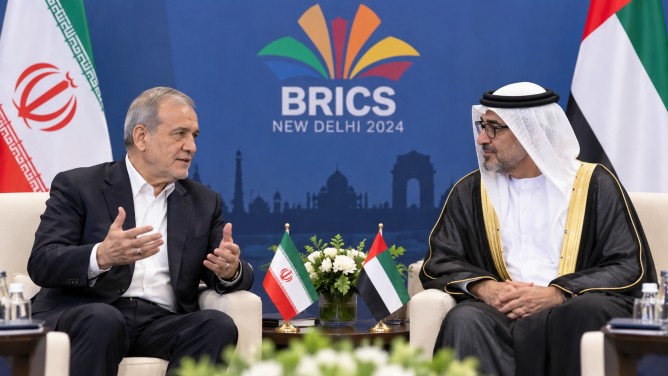
In a significant diplomatic development, Iranian President Masoud Pezeshkian has announced intentions to mend ties with the United Arab Emirates (UAE) after a productive meeting with Abu Dhabi Crown Prince Khaled bin Mohamed. The meeting, held on the sidelines of the BRICS Summit in New Delhi, was characterized by a mutual agreement to move past previous disagreements and focus on future cooperation. This engagement comes amid ongoing regional tensions and a collective desire to enhance security and shipping routes in the area.
Furthering these diplomatic initiatives, Iran is set to meet with representatives from Gulf countries and Iraq in Oman on September 14. The discussions are anticipated to center on regional security, with a particular focus on the strategic Strait of Hormuz. These talks aim to foster better understanding among regional nations and bolster collective security measures. Notably, Bahrain has opted out of participating in these discussions.
During the BRICS Summit, President Pezeshkian also emphasized the importance of economic collaboration among BRICS nations. He advocated for the increased use of national currencies in trade and the development of improved financial frameworks, highlighting the vulnerability of emerging economies to political and economic pressures within the current global systems. Pezeshkian called for enhanced economic resilience and cooperation, urging BRICS countries to stand against unilateral sanctions and attacks on civilian infrastructure.
Pezeshkian underscored Iran’s strategic advantages, including its energy resources and transit networks, which he suggested could significantly contribute to the establishment of trade and energy corridors connecting BRICS economies. His remarks highlight Iran’s potential role in strengthening economic ties and infrastructure within the bloc, offering a pathway to increased regional and international trade routes.
These diplomatic moves are taking place against a backdrop of intensified tensions around the Strait of Hormuz, underscoring the critical necessity for regional dialogue and cooperation to ensure security and the stability of global energy supplies. The outcomes of these engagements could play a pivotal role in shaping future regional dynamics and economic partnerships.