
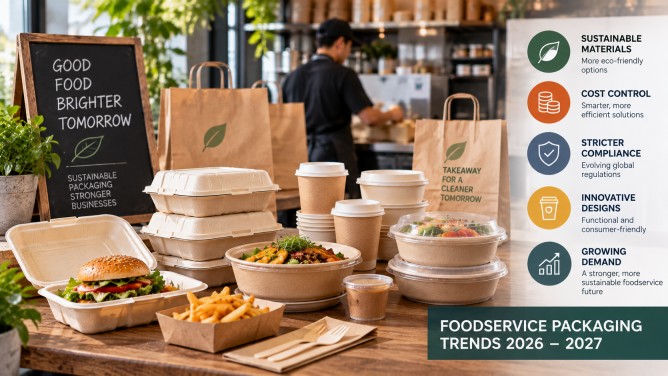
By 2026–2027, the landscape of foodservice packaging is set to undergo significant transformations, emphasizing enhanced takeaway performance, strict adherence to regulations, and tailored barrier solutions for specific applications. Restaurants, distributors, and food brands are increasingly assessing sustainable packaging options that go beyond merely replacing plastics to evaluating performance, overall cost, and validated product claims. This shift is largely driven by the need for robust packaging solutions for hot, oily, and moisture-laden foods, as well as the growing importance of verifying product claims related to PFAS, compostability, and food-contact safety, all of which require proper documentation.
The demand for takeaway packaging that can withstand heat, steam, grease, and transportation challenges is rising. Molded sugarcane bagasse is emerging as a popular choice for hot-food applications due to its rigidity and fiber-based appearance. However, for more demanding scenarios, PFAS-free barrier treatments and coatings or laminated structures are necessary. Restaurants and distributors are advised to conduct tests with their actual menu items to select the correct container size and design before bulk ordering.
Cost control is another area undergoing change, with high-volume buyers now prioritizing the total landed cost of packaging over mere unit price. This approach considers various cost factors, including freight, warehousing, inventory holding, and potential packaging failures. Direct sourcing from food packaging manufacturers offers better insights into production planning, quality control, and customization, which can be particularly beneficial for OEM/ODM programs involving custom molds and branded packaging.
As regulatory compliance becomes more stringent, particularly with the introduction of Regulation (EU) 2025/40 in the European markets, buyers need to demand verifiable documentation for claims such as PFAS-free, compostable, and food-safe products. The focus has shifted to ensuring compliance at the finished-product level, considering the entire packaging system, including coatings, inks, adhesives, and lids. This shift towards application-specific barrier solutions allows for customized packaging development that meets the specific needs of different food types, rather than relying solely on standard materials.
Ensuring consistent supply is crucial for restaurants and packaging distributors, which is leading to a growing interest in a supplier’s manufacturing capacity. Grizzlies, for instance, operates 11 production bases and boasts a significant monthly production capacity. Their capabilities in production coordination, quality control, and application-specific projects make them a suitable partner for bulk and customized orders. As the demand for more performance-driven, compliance-focused, and application-specific foodservice packaging grows, buyers are encouraged to thoroughly evaluate the packaging’s performance with actual food, the total supply-chain cost, and the manufacturing capabilities of their suppliers.
Legal Disclaimer:
The information contained in this article has been provided by independent third-party contributors, clients, or content partners. We do not independently verify the accuracy, completeness, legality, ownership, licensing, or reliability of submitted content, including text, images, videos, trademarks, or other media materials. The submitting party is solely responsible for ensuring that all content, including images and media assets, complies with applicable copyright, trademark, licensing, and intellectual property laws. We disclaim liability for any unauthorized use of copyrighted or proprietary materials by third parties. If you believe that any content published on this platform infringes your intellectual property rights, kindly contact the author above for prompt review and resolution.