
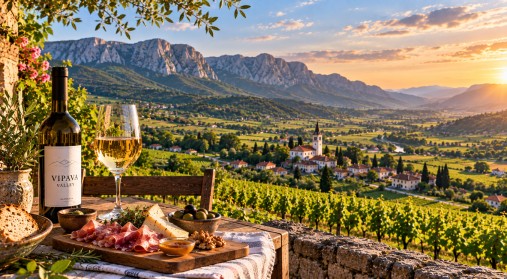
Nestled in the southwest of Slovenia, the Vipava Valley offers a serene escape from the country’s more popular tourist spots, with its charm rooted in vineyards, lush mountains, and traditional villages. Located about an hour from Ljubljana and close to the Italian border, this picturesque valley is characterized by the Vipava River, sprawling agricultural plains, and steep karst hills richly dotted with vineyards and forests.
A notable feature of the Vipava Valley’s environment is the burja, a fierce seasonal wind blowing in from the Alpine region. This wind, combined with the valley’s dry climate and karst soil, has fostered unique farming practices and a vibrant winemaking culture. Wine is central to the local economy, with vineyards adorning many of the valley’s slopes and numerous small wineries and estates inviting visitors to discover regional wine varieties and traditional production techniques.
The culinary scene in the Vipava Valley is equally enticing, spotlighting local delicacies such as mature cheeses, fresh goat and sheep products, cured meats, and vegetables. Restaurants and farm-based dining establishments pride themselves on menus that showcase these locally sourced ingredients, woven into traditional Slovenian recipes. The valley’s quaint villages are also gaining attention, with old farmhouses and rural buildings being renovated for accommodation, thus preserving cultural heritage while boosting tourism.
For those seeking outdoor adventures, the valley offers a wealth of options. Cycling routes meander through vineyards and villages, while walking trails invite exploration into the surrounding hills. The diverse terrain is perfect for paragliding and other outdoor activities. History buffs have plenty to explore too, with the Roman heritage of Ajdovščina and the historic streets of Vipavski Križ offering rich insights into the area’s past, and the nearby Nova Gorica opening a window to the unique cultural landscape shaped by the Slovenian-Italian border.
In contrast to destinations dominated by large hotels and mass tourism, the Vipava Valley’s tourism is evolving through smaller-scale accommodations, farms, wineries, and local activity providers. This approach gives the region a distinctive rural character, offering travelers a quieter, more intimate experience. With its alluring blend of food, wine, nature, and history, the Vipava Valley is emerging as a must-visit destination for those seeking a tranquil alternative to Slovenia’s more renowned tourist areas.